From Abacus to Algorithms Institute Guides Educators to Shape Students Into Responsible Digital Learners
Technology has evolved rapidly over the past several decades, moving from simple calculation tools to complex artificial intelligence (AI) systems that have shaped how our society obtains, creates and uses information. Digital literacy has become a critical skill every person needs to be an informed community member and to confidently use technology with purpose. In this technologically dependent era, educators are wondering how to build these digital skills in their students as well as how to apply these technologies in their classrooms.
The Friday Institute for Educational Innovation guided educators to responsibly use these technologies with their students during the From Abacus to Algorithms: Preparing Students in a Digital Age Institute. Designed to equip K-12 educators with the knowledge and pedagogical strategies needed to prepare students for responsible and informed choices in the digital world, this 3-week program helped educators ask deep questions about technology, learning and our responsibility to our students and the world around us.
“AI gives us a reason to revisit questions that have always mattered in education: How do students learn? When does a tool help with the teaching and learning process? What skills do students need to make decisions for themselves?” said Emma Braaten, director of digital learning at the Friday Institute for Educational Innovation. “From Abacus to Algorithms is providing K-12 educators with the opportunity to explore these questions and find answers best suited for their own learning environments.”
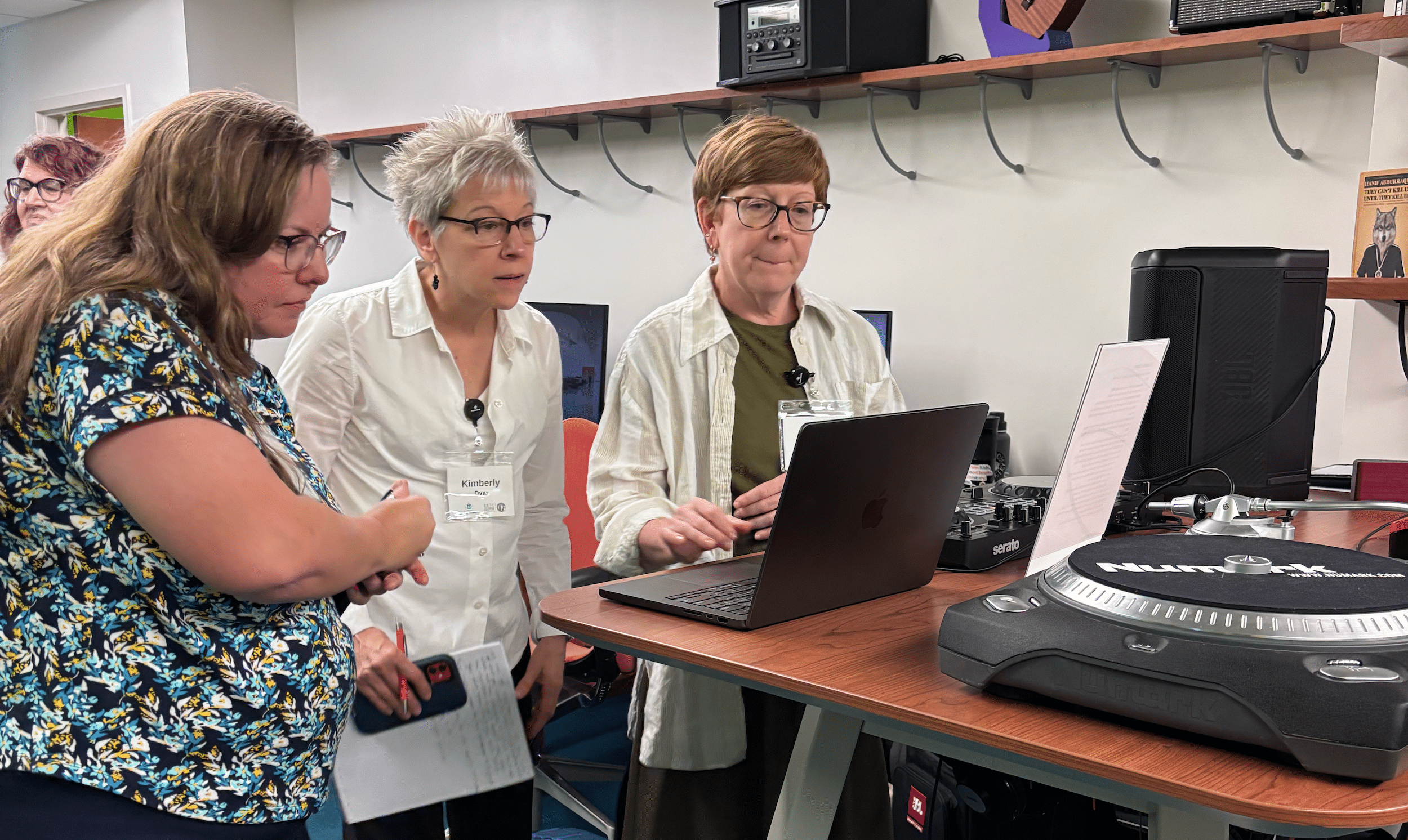
The Institute, led by the Friday Institute in partnership with the Digital Citizenship Foundation and funded by The National Endowment for the Humanities, engaged 16 K-12 educators from a range of grade levels and subject areas in person at the Friday Institute this summer and then for two weeks virtually.
Putting Purpose First

AI integration in education begins with intentionality. The Institute challenged educators to lead with values and ethics when assessing technology, moving beyond what AI can do and instead asking what AI should do.
“We’ve been all so caught up in how to solve the problem of AI in our schools, and we jump to policy too quickly,” said Nicole Sintetos, English department chair at the Cate School. “This Institute forces us to spend three full days first talking about values and philosophy before we begin building out.”
Integrating technology in a thoughtful way means slowing down, clarifying values and ensuring technology serves learning rather than drives it.
“Slower and deliberate is way better sometimes,” said Kip Glazer, principal at Mountain View High School; a nationally recognized speaker on ed leadership, edtech and AI; and a presenter during the Institute. “I have been speaking about how philosophy should come before policy, privacy protection over a focus on productivity, and, finally, the public good over profit.”
Participants engaged in conversations about how to prepare students and support their colleagues as they navigate emerging technologies. They spent the first week wrestling with questions about the ethical use of AI and how to best equip students for a future we don’t fully understand.
“All the activities were value-added in wrestling with this beast we call AI,” said Lorraine Romano, video communications teacher at Humphreys High School. “But what was unexpected and surprisingly eye opening to me is how much time we spent talking about the philosophy, intention and ethics of AI in education.”
Empowering Educators
Educators were not expected to come up with all of the answers. One of the goals of the Institute was to empower educators to approach AI responsibly, thoughtfully and confidently in their own ways to develop practices and understandings for their classrooms and schools. Institute staff guided participants in exploring ethical approaches to intentional AI integration with a full understanding of the benefits and limitations.
“This is a values-forward workshop that allows teachers to work toward an AI policy and practice that fits their school’s vision,” said Sintetos. “It does not force a “one size fits all” model for AI teaching and pedagogy but instead celebrates teacher agency to pursue the best practice for their own teaching context.”
Educators left the Institute with practical ideas, new resources and a supportive community of practice. In the following weeks of the Institute, educators worked on a capstone project, called futurescaping, to synthesize their understanding of emerging technologies into something for their school or classroom that is framed by their vision for the future.
“The course was exceptional in having us interrogate our current relationships with technology and reflect on what is the true purpose of education so we can create better pathways and experiences for our students with technology in the future,” said Eric Viets, an English teacher at Murray Hill Academy. “I’m excited and inspired to use our best practices of teaching and human connection to support our students in navigating an AI (or other tech) future.”
Fostering Thoughtful Digital Practices in Today’s Students

Practicing ethical and safe technology use allows students to navigate modern digital spaces with confidence and integrity. Students are online every day to learn, communicate and create, so educators and schools play an important role to help students develop the skills they need to navigate these digital spaces. Embedding practices like discernment and evaluation within classroom instruction empowers students to make responsible decisions online, protect their personal information, evaluate online information critically and communicate respectfully with others.
“Learning more about how to use AI in my classroom to support the aptitude and appetite of students who’ve grown up with so much media is important to me,” said Rabiah Khalil, a secondary English teacher at the Canadian International School of Singapore. “And yes, to do that in an ethical way, to do that in a way that does not discourage students from using their own imagination and paper resources as well.”
Educators can better equip students to become ethical, safe members of the online world by modeling respectful online behavior, establishing clear technology expectations and teaching digital safety skills.
“This Institute was a great way to examine the big issues about AI,” said Kelliann Flores, a Spanish teacher at Clements High School. “More than a collection of activities, we focused on the ethics, use and future of technology, including but not limited to AI. How can we use it to improve our teaching and enhance our student’s cognition? Community and humanity cannot be disregarded when using technology that increasingly tends to isolate us from one another.”
The future of education will not be shaped by technology but by educators who lead purposely and put students first. The From Abacus to Algorithms Institute is helping educators shape that future for students with confidence and the resources they need.
“We’re able to come up with our own ideas,” said Melissa Kalwanski, K-12 gifted coordinator at Westmont Hilltop School District. “Come up with our own ways for working with our students and preparing them for this new future that exists, or will exist, and we’re doing that with guides who understand both AI and education and who have been where we are, which I think is just so vital.“


